Our long-term ambition is to decouple our growth from dependence on critical and finite resources while reducing our emissions; this demands robust financing plans.
Financing our transition
The challenge
H&M Group has science-based targets to reduce our emissions by 56% by 2030. This decarbonisation—achieved through switching to renewable energy, introducing energy-efficiency measures, and changing processes—requires significant investment. Projects like these often have long payback periods and therefore frequently receive lower priority. But we can’t wait. We need to find ways to make these investments happen now.
Our approach
Our plans for financing the transition are mainly designed to speed up decarbonisation across our value chain. They bridge the gap between business goals and climate ambitions, bringing financing for long-payback projects within reach.
Our main focus is funding the decarbonisation of fabric production, a resource-intensive process. In general, the first step is to introduce energy-efficiency measures. We then look at electrifying factories where steam is used to power equipment or processes, while also switching to renewables, such as solar power, where possible. Other projects we support include developing materials, decarbonising logistics, and scaling new business models. Together, our initiatives create an ecosystem of support that can enable suppliers to decarbonise in a cost-effective way.
Our initiatives
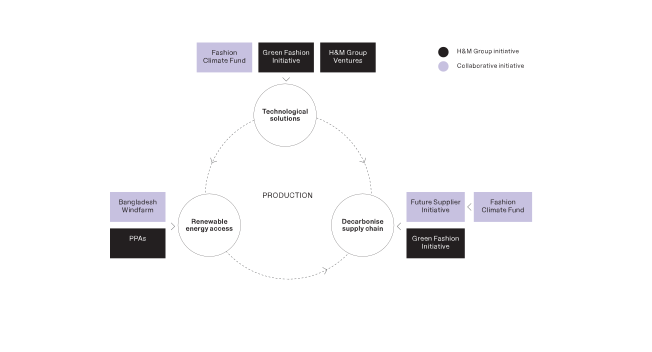
H&M Group initiatives
Our in-house funding programmes target different parts of the decarbonisation journey:
Green Fashion Initiative (GFI)
Limited technical expertise, restricted access to finance, high interest rates and low returns on investment are common barriers for suppliers who want to cut their emissions. Our internal programme, GFI, offers direct financial support and financing at favourable terms, made possible by our guarantees and network of banking partners.
The investments support initiatives within the following categories:
- Energy-efficiency projects to help suppliers reduce the total amount of electricity and steam used in their operations.
- Electrification of high-energy processes to help suppliers move away from high fossil fuels, including heat pumps and thermal energy storage.
- Installation of on-site solar panels so factories can generate their own renewable energy, reduce the risk of power cuts and save significantly on energy bills.
- Investment in off-site solar or wind facilities that benefit factories and local communities.
- Replacing boilers or changing fuel types to replace fossil fuels with more efficient and renewable alternatives.
Power purchase agreements (PPAs)
We are signing PPAs with renewable energy developers. In these contracts, we commit to a fixed price for electricity generated by solar parks or wind farms that have not yet been built. These agreements provide long-term price certainty for energy developers, helping to make projects viable and increasing the amount of renewable energy available on the local grid.
H&M Group Ventures
Our venture capital supports entrepreneur-led companies with both capital and expertise from the fashion industry. Several of the investment themes address sustainability topics, such as decarbonisation technologies and new service solutions. Current investments include, for example, Rondo and Syre.
Collaborative initiatives
We share suppliers with several other fashion brands, and a collaborative approach to financing is key to drive a rapid, cost-efficient and large-scale transition. We believe that openness and knowledge sharing can accelerate this collaboration, and in spring 2026, together with EY, we launched a white paper addressing common challenges and actionable solutions for decarbonization. For more information, read the paper here.
Below are some of our financing initiatives that are delivered together with financial institutions and/or other fashion brands:
Future Supplier Initiative (FSI)
FSI brings brands together to collectively finance decarbonisation projects with shared suppliers producing fabric and finished garments. It keeps the cost of capital low for suppliers and includes access to technical support, as well as the opportunity to build long-term, resilient business relationships.
H&M Group, BESTSELLER, Gap Inc., Mango, Ralph Lauren, Marks & Spencer and Tchibo are currently developing investment proposals for the first projects at shared suppliers in Bangladesh and India, targeting the most impactful activities at factory level. Next steps include implementing the projects and scaling to new regions as more brands join the initiative.
Fashion Climate Fund
We are one of the lead partners in Apparel Impact Institute’s Fashion Climate Fund, which funds environmental impact programmes to pilot and scale new technologies in the textile, apparel and footwear supply chains.
Bangladesh wind farm
We have signed a letter of intent to co-invest in developing a wind farm in Bangladesh alongside the fashion brand BESTSELLER. The project is facilitated by Global Fashion Agenda and Copenhagen Infrastructure Partners.

RELATED