We focus on building long-term relationships with our suppliers, based on regular dialogue and clear expectations.
Supply chain
Our supply chain includes several stages, from raw materials to finished products. Like many clothing brands, H&M Group does not own the factories where our products are made. Instead, we work with independent suppliers and manufacturers. We first published our supplier list in 2013 and continue to share information about the factories involved in making our products.
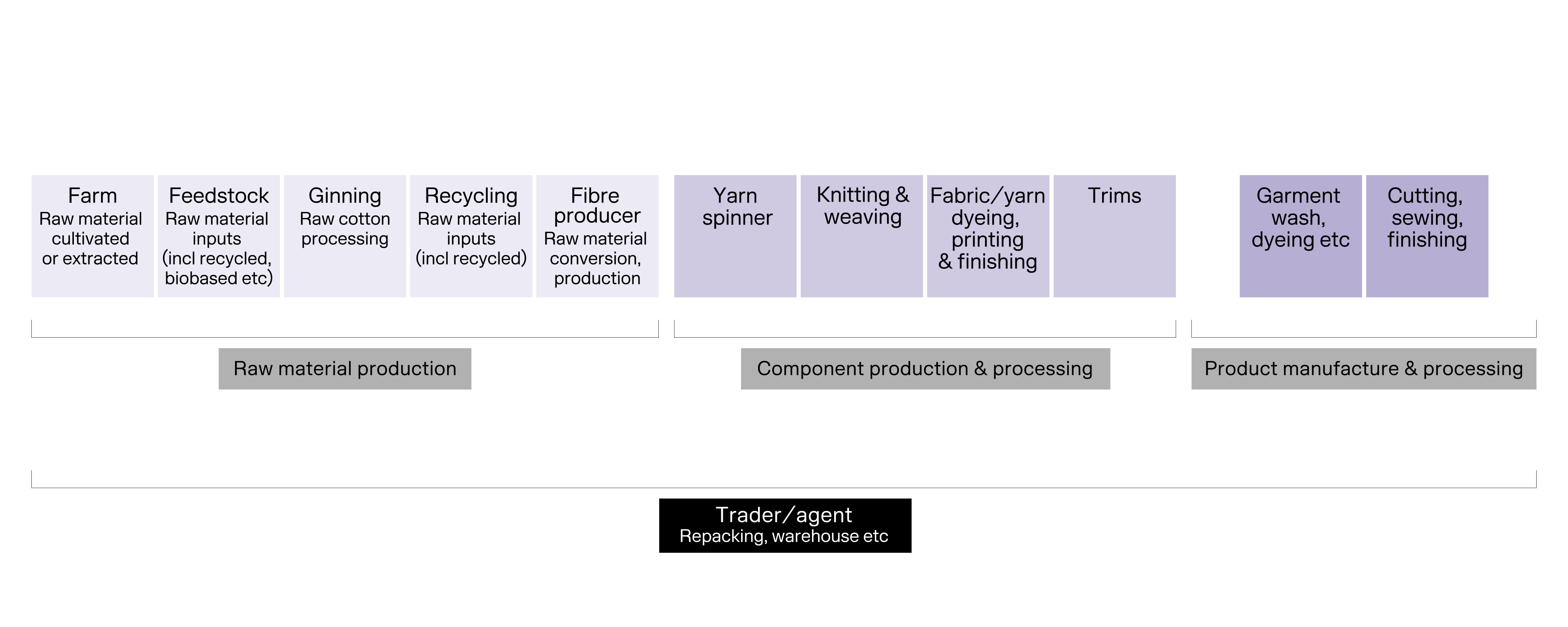
The factories we work with are divided and categorised into different tiers. Tier 1 suppliers are the companies we do business with directly for product manufacturing or processing. Component production and processing is typically carried out in tiers 2 to 4, while raw material production usually falls within tiers 4 to 6.
Our supply chain in numbers
- We do business with over 554 suppliers who manufacture products for our brands in over 969 tier 1 factories in Europe, Asia and North America.1
- China and Bangladesh are the largest production markets for clothing.
- The European Union is the largest production market for our beauty assortment.
- Our supplier relationships average nine years. We have worked with some suppliers for more than 20 years.2
- Around 1.1 million people are employed by the tier 1 and tier 2 supplier factories we work with. Of these workers, 59% are women.1
- Around 0.4% of workers in the tier 1 and tier 2 supplier factories we work with are migrant workers, meaning people who have moved for work or work opportunities.
- We operate 12 local production offices, employing over 1,300 colleagues who work with our suppliers daily.
- 36% of tier 1 factories have trade union representation.1, 3
- 702 tier 1 factories reported that trade union representatives are freely chosen by the workers.3
Our supplier list
Our supplier list discloses the details of tier 1 manufacturing and processing factories, accounting for 99% of the products we sell.
The list also includes details of tier 2 factories that provide our suppliers with fabric, including tanneries, fabric dyeing and printing factories, where this information is available.1
In line with the Transparency Pledge, we share the name, address, product type produced and number of workers employed at the factories. We also publish how long we have worked with each factory, the percentage of female workers and whether trade unions are present. We update this supplier list quarterly.3
We onboard new suppliers or factories and, occasionally, phase them out according to our business needs. When this happens, we follow the ACT Responsible Exit Policy, a framework that supports exits from factory relationships while safeguarding workers’ rights. The ACT Responsible Exit Policy details how to exit a supplier relationship with minimal impact. This policy and checklist are applicable when exiting a factory for business reasons (including ramping down with a view to exit). Read more on our purchasing practices page.
You can also find our suppliers on the Open Supply Hub, an open-source tool that exists to provide more information and transparency on supply chains and working conditions in and around factories and facilities.
A typical fashion supply chain
From raw materials to a finished item, our products pass through many different suppliers on their journey to our stores. These suppliers are grouped into tiers, based on their role in the supply chain.
Supply chains vary by product type and material. Some are shorter, with fewer tiers, while others include several tiers and production stages.
- Tier 1 suppliers are companies we work with directly for product manufacturing or processing.
- Companies involved in component production and processing generally fall into tiers 2 to 4.
- Raw material production can cover tiers 4 to 6.
Manufacturing factories
These factories are either owned or contracted by our suppliers to make our products. They can also be called “cut and sew” factories or tier 1 factories. A single supplier can own or contract one or more factories. They are covered by our Sustainable Impact Partnership Programme (SIPP) that assesses their environmental and social compliance and performance.
Processing factories
Processing factories are subcontracted by our suppliers to carry out processes such as embroidery or printing. They can be subcontracted by several suppliers and may also be manufacturing factories. Processing factories must be approved by our teams and are included in our Sustainable Impact Partnership Programme (SIPP).
Fabric mills
Tier 2 suppliers make fabrics and sell them to other suppliers. We work with our tier 1 suppliers to identify the mills producing fabric for our products, so they can be included in the Sustainable Impact Partnership Programme (SIPP) where applicable.
1 Figures correct as of January 2026.
2 Consecutive data only available from 2006.
3 Trade union data in supplier list collected by industry assessment tools and updated yearly.
In our annual and sustainability progress report, we set out our goals and the progress we’ve made in the previous year. Find the latest version here.